
What the Best NEMT Insurance Companies Offer (And Why It Matters for Your Business)
Non-Emergency Medical Transportation (NEMT) plays a critical role in the healthcare system. NEMT providers transport patients who do not require emergency care but still need reliable transportation to medical appointments, dialysis treatments, rehabilitation services, hospital discharges, and specialist visits. Many of these passengers rely on wheelchair vans or specially equipped vehicles, which makes safety, compliance, and operational reliability essential.
Unlike traditional taxi or rideshare services, NEMT businesses operate within a regulated environment. Most providers work under Medicaid contracts, private healthcare agreements, or broker networks that require strict compliance standards. One of the most important of those standards is insurance. In nearly every state, carrying proper non-emergency medical transportation insurance is mandatory before you can legally operate or secure contracts.
Because the risks involved in medical transportation are higher than standard passenger transport, the insurance requirements are also more complex. NEMT operators must carry sufficient liability insurance, commercial auto coverage, and often additional policies to protect passengers, drivers, vehicles, and the business itself. Failing to meet insurance requirements can result in denied contracts, revoked operating authority, or serious financial exposure in the event of an accident or claim.
This is where experienced nemt insurance companies become essential partners rather than just policy providers. The best insurers understand the medical transportation industry, the regulatory environment, and the operational realities of running fleets that transport vulnerable passengers. They offer coverage options specifically designed for NEMT businesses, not generic commercial auto policies that leave critical gaps. Choosing the right nemt transportation insurance ensures your policy aligns with Medicaid contract standards, passenger liability exposure, and the unique risks associated with medical transport.
In this guide, we will break down what the best NEMT insurance companies offer, the types of coverage every operator should understand, the average cost for NEMT insurance, and why choosing the right insurer directly impacts your long-term success. Whether you are launching a startup with one vehicle or managing a growing fleet, understanding your insurance options is one of the most important decisions you will make.
What Are NEMT Insurance Companies?
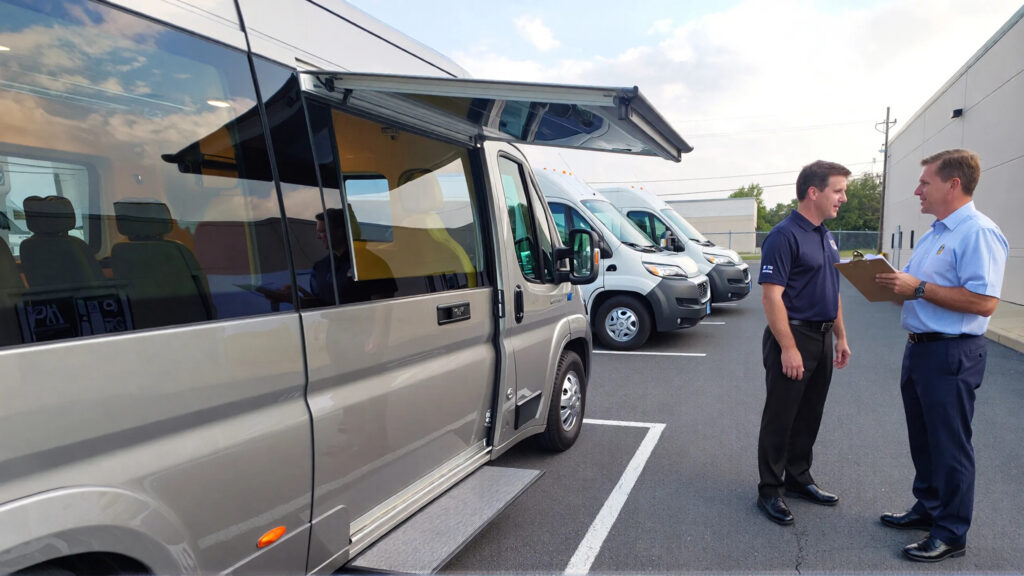
NEMT insurance companies are insurance providers that specialize in covering businesses that operate in the non emergency medical transportation industry. In simple terms, they insure companies that transport patients to and from medical appointments when emergency care is not required.
Unlike general insurers that write policies for a wide range of businesses, these companies focus specifically on medical transport operations. That includes wheelchair vans, stretcher vans, ambulatory vehicles, and multi vehicle fleets that provide transportation services under Medicaid contracts, broker agreements, or private healthcare partnerships.
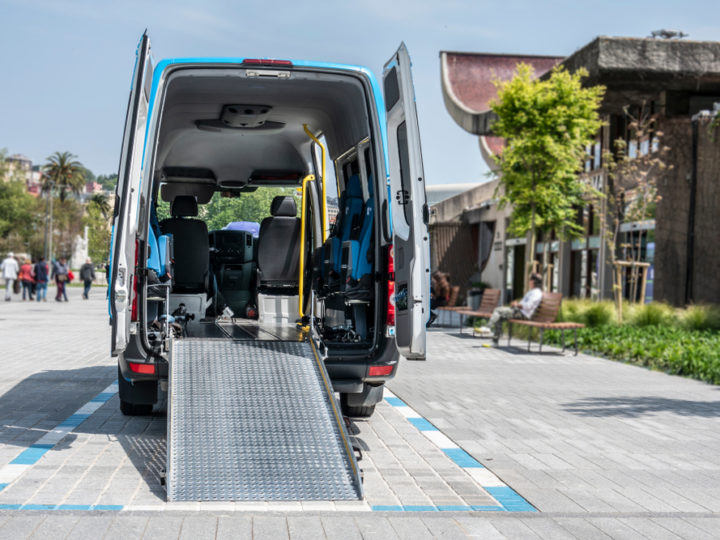
This specialization matters because non emergency medical transportation carries a different level of risk than traditional passenger transport. Drivers are often assisting elderly or medically fragile individuals. Vehicles are equipped with wheelchair lifts and securement systems. Passengers may require physical assistance entering and exiting vehicles. These operational realities increase liability exposure beyond what a standard commercial auto policy is designed to handle.
The best nemt insurance companies understand those exposures. They review driver screening procedures, trip volume, fleet size, passenger assistance protocols, and compliance requirements tied to state or Medicaid contracts. They also evaluate how wheelchair securement systems are maintained and how safety procedures are documented. Guidance from the National Highway Traffic Safety Administration emphasizes the importance of proper wheelchair securement and occupant protection in transport vehicles, which directly influences how insurers assess risk.
This level of industry specific underwriting separates specialized insurers from general auto insurance providers. A traditional commercial auto carrier may be willing to write a policy for a transport vehicle, but that does not mean the coverage is structured around passenger assistance liability, broker required limits, or the administrative demands of medical transportation contracts.
Medical transportation businesses must also meet specific insurance requirements in order to operate legally or secure contracts. These often include minimum liability limits, certificates naming additional insureds, and proof of coverage that satisfies state or broker guidelines. Insurers familiar with the medical transportation industry are typically better equipped to navigate these requirements efficiently and accurately.
Demand for medical transportation continues to grow as the population ages. Data from the U.S. Census Bureau shows that adults age 65 and older represent one of the fastest growing demographic groups in the country. As that demand increases, the importance of working with insurers who understand transportation related risk becomes even more critical.
In short, NEMT insurance companies are not simply auto insurers. They are transportation focused insurance providers that structure policies around the specific operational, regulatory, and liability realities of the non emergency medical transportation industry.
Why Choosing the Right NEMT Insurance Company Matters
Choosing the right insurance partner is not just a purchasing decision. For medical transportation businesses, it directly affects compliance, financial stability, and long term viability.
Non emergency medical transportation providers operate in a regulated environment. Most states require minimum commercial auto liability limits before a company can legally transport passengers. In addition, Medicaid brokers and healthcare contracts often require higher limits than state minimums, along with certificates naming additional insured parties. Some contracts also require proof of general liability coverage and workers compensation.
Failing to meet these insurance requirements can delay contract approval, interrupt operations, or even result in license suspension. Insurers that routinely work with medical transportation businesses understand these compliance standards and structure policies accordingly. They are familiar with documentation requirements and certificate requests, which helps operators avoid administrative delays.
Beyond compliance, the right insurance company provides meaningful financial protection. NEMT vehicles represent a significant investment. Wheelchair accessible vans, lift systems, and fleet vehicles require proper coverage in the event of accidents, theft, or physical damage. A standard commercial auto policy may cover collision and property damage, but medical transport businesses also face passenger related liability exposure.
Passengers transported by NEMT providers are often elderly or medically vulnerable. Even minor incidents can result in injury claims. Passenger assistance, wheelchair securement, and transfer procedures all create additional liability exposure. If coverage limits are too low or exclusions are overlooked, a single claim could put a business at serious financial risk.
This is why experienced nemt insurance companies structure policies around real world transportation risk rather than simply offering the lowest possible premium. Adequate liability limits, passenger coverage considerations, and properly aligned commercial auto protection all work together to protect vehicles, drivers, and passengers.
The financial consequences of choosing incomplete coverage can be severe. A lower premium may seem attractive, especially for startups managing tight budgets. However, policies that are not built specifically for medical transportation can contain coverage gaps. These gaps may not become apparent until a claim occurs.
For example, some general auto policies are not designed with passenger injury exposure in mind. Others may not meet broker required limits. In those situations, operators can find themselves responsible for out of pocket legal costs, settlement amounts, or contract termination.
Insurance is one of the largest ongoing expenses in the medical transportation industry. But it is also one of the most important safeguards. The goal is not simply to find the cheapest option. The goal is to secure coverage that protects your business, satisfies regulatory standards, and supports sustainable growth.
When evaluating insurers, business owners should consider more than just the price of premiums. They should evaluate whether the insurer understands medical transportation operations, compliance requirements, and passenger liability exposure. The right insurance company does more than issue a policy. It helps protect the foundation of your business.

Core Coverage Offered by the Best NEMT Insurance Companies
The best nemt insurance companies do not rely on a single policy to protect medical transportation businesses. Instead, they build coverage programs that combine multiple insurance types to address the layered risks involved in transporting patients.
Non emergency medical transportation businesses operate vehicles, assist passengers, manage schedules, handle contracts, and employ drivers. Each of these areas creates a different type of exposure. That is why bundled and customized policies are critical. A well structured insurance program brings together commercial auto, liability protection, and employee coverage so that gaps do not exist between policies.
Rather than purchasing separate policies from different providers, many operators benefit from working with insurers who understand how these coverages work together. Customizing limits and endorsements to match fleet size, trip volume, and contract requirements ensures that coverage supports long term stability.
NEMT Commercial Auto Insurance
NEMT commercial auto insurance is the foundation of any medical transportation policy. It provides liability protection if a driver causes bodily injury or property damage while operating a vehicle for business purposes. It also typically includes physical damage coverage for the insured vehicle.
Liability coverage helps pay for injuries to other drivers, passengers in other vehicles, or property damage resulting from an accident. Given that NEMT vehicles transport passengers daily, adequate liability limits are essential.
Physical damage coverage protects the vehicle itself. Wheelchair accessible vans and transport vehicles often require expensive modifications such as lifts, ramps, and securement systems. If a vehicle is damaged in a collision, stolen, or vandalized, physical damage coverage helps repair or replace it.
Because these vehicles are central to daily operations, downtime can significantly impact revenue. Properly structured nemt commercial auto insurance ensures that vehicles used for patient transport are financially protected.
General Liability Insurance
General liability insurance covers claims that arise outside of vehicle operation but still relate to business activities. For NEMT providers, this often includes passenger injuries that occur while assisting individuals into or out of the vehicle.
For example, if a passenger slips while being helped to a wheelchair lift, that claim may fall under general liability rather than auto liability. Third party claims involving bodily injury or property damage that do not directly result from driving may also fall into this category.
Auto insurance alone is not always sufficient. General liability coverage provides an additional layer of protection for business operations that extend beyond simply operating a vehicle.
For companies working under Medicaid contracts or broker agreements, proof of general liability insurance is often required as part of compliance documentation.
Professional Liability / Errors & Omissions
Professional liability insurance, sometimes referred to as errors and omissions coverage, protects against claims related to service mistakes or alleged failures in the transportation process.
While NEMT providers do not provide medical treatment, they do provide a critical service that patients depend on. Claims can arise from scheduling errors, failure to arrive on time, missed appointments, or transportation delays that result in financial or personal harm.
For example, if a transport delay causes a patient to miss a critical medical appointment and the provider alleges negligence, errors and omissions coverage may respond depending on the policy terms.
This coverage is particularly important for businesses that coordinate high volumes of trips or work under structured service contracts.
Workers’ Compensation Insurance
Workers compensation insurance protects drivers and staff members if they are injured while performing job related duties.
NEMT drivers frequently assist passengers, operate lifts, secure wheelchairs, and drive long hours. These activities create the potential for workplace injuries such as strains, falls, or vehicle related incidents.
Most states require employers to carry workers compensation insurance if they have employees. Coverage typically pays for medical expenses and a portion of lost wages if an employee is injured on the job.
Beyond legal compliance, workers compensation protects the business from direct liability for employee injuries and provides financial support for staff members during recovery.
For transportation businesses with multiple drivers or growing fleets, ensuring proper workers compensation coverage is a key part of building a stable and compliant operation.
Additional Coverage Options Often Provided
Beyond core coverage, the best NEMT insurance companies often provide additional insurance options that help businesses manage growth and evolving risk.
As medical transportation companies expand, they may add vehicles, hire more drivers, take on new contracts, or temporarily use rented vehicles. Each of these changes can create new exposure that basic policies may not automatically cover. Optional add on coverage allows operators to scale responsibly without leaving gaps in protection.
While not every business needs every add on immediately, these options become increasingly important as fleets grow and operations become more complex.
Non-Owned & Hired Auto Coverage
Non owned and hired auto coverage protects a business when vehicles that it does not own are used for company purposes.
For example, if a company rents a vehicle temporarily while one of its primary vans is being repaired, a standard commercial auto policy may not automatically extend coverage to that rental vehicle. Hired auto coverage helps address that exposure.
Non owned auto coverage applies when employees use their personal vehicles for business related transportation activities. If an employee owned vehicle is used to transport a patient and an accident occurs, the business could be held liable. Non owned coverage provides protection in situations where the vehicle itself is not titled to the company.
This type of flexibility is particularly valuable for growing NEMT fleets. As companies test new service areas or add temporary routes, they may rely on rented or substitute vehicles before committing to permanent purchases. Proper coverage ensures that operational expansion does not create unexpected liability risk.
Umbrella Insurance
Umbrella insurance provides additional liability protection above the limits of underlying policies such as commercial auto or general liability.
Medical transportation businesses can face significant exposure in the event of a serious passenger injury claim. If a claim exceeds the liability limits on the primary policy, the business may be responsible for the remaining balance. Umbrella coverage extends those limits and adds another layer of financial protection.
For example, if a commercial auto policy provides one million dollars in liability coverage and a claim exceeds that amount, umbrella insurance can help cover the excess, up to the umbrella policy limit.
This additional protection is especially important for companies transporting medically vulnerable passengers or operating multiple vehicles daily. Higher trip volume increases exposure, and severe claims can be financially devastating without adequate limits.
As fleets grow, umbrella coverage becomes a strategic tool rather than an optional expense. It helps safeguard long term stability by protecting business assets in high claim situations.

Average Cost for NEMT Insurance
The average cost for nemt insurance can vary significantly depending on the size and structure of the business. There is no universal price because medical transportation operations differ widely in fleet size, trip volume, passenger type, and geographic location.
In general, small operators with one or two vehicles can expect premiums that are noticeably higher than standard commercial auto coverage due to the elevated liability exposure associated with transporting passengers. As fleets expand and coverage limits increase, annual premiums typically rise accordingly.
Most policies combine commercial auto liability, physical damage coverage, and other protections into one insurance program. That bundled structure contributes to overall cost. Higher liability limits required by Medicaid brokers or state contracts can also increase premiums.
State regulations play a major role. Some states mandate higher minimum liability limits for passenger transportation businesses. Urban areas may see higher premiums due to traffic density and claim frequency, while rural operators may experience different pricing based on mileage and route types.
Fleet size is another primary driver. Insuring multiple vehicles increases total exposure, although insurers may apply fleet rating structures that differ from single vehicle policies. Claims history also directly affects cost. Businesses with prior passenger injury claims, frequent accidents, or driver violations will generally face higher premiums.
It is important for operators to view insurance as a long term investment rather than a short term expense. While cost matters, adequate coverage that protects the business from severe financial loss should remain the priority.
What Factors NEMT Insurance Companies Use to Set Rates
NEMT insurance companies evaluate several operational and risk related factors when determining premiums. These underwriting considerations help insurers assess the likelihood and severity of potential claims.
One of the primary factors is the type and number of vehicles being insured. Wheelchair accessible vans with lifts and securement systems often cost more to repair or replace than standard passenger vehicles. Fleet size also increases overall exposure because more vehicles on the road create more opportunity for claims.
Driver qualifications are equally important. Insurers review driving records, years of experience, licensing status, and any history of violations or accidents. A strong safety record can significantly improve pricing, while repeated violations or prior claims can increase premiums.
Coverage limits selected by the business also impact cost. Higher liability limits provide greater financial protection but typically result in higher premiums. Many Medicaid brokers require limits above state minimums, which can influence pricing decisions.
Business location plays a role as well. Operators serving densely populated urban areas may face higher premiums due to traffic congestion and increased accident frequency. Companies operating across multiple counties or state lines may encounter additional regulatory requirements that affect underwriting.
Operating hours and trip volume are also considered. Businesses that run extended hours, provide high frequency transportation, or transport passengers long distances present a different risk profile compared to limited route operators.
Finally, overall business stability can influence underwriting. Insurers may evaluate how long the company has been operating, whether it has established safety procedures, and how claims are documented and managed.
Strong safety practices, consistent driver training, and well maintained vehicles can positively influence rates over time. While premiums are influenced by many factors, maintaining a clean safety record remains one of the most effective ways to manage insurance costs in the medical transportation industry.
How to Compare NEMT Insurance Companies Effectively
When evaluating nemt insurance companies, business owners should look beyond surface level pricing. The lowest quote does not always provide the protection required for medical transportation operations.
Industry experience should be one of the first considerations. Insurers that routinely work with transportation businesses understand how Medicaid contracts function, how passenger liability claims unfold, and what documentation brokers require. Experience within the medical transportation industry reduces the likelihood of misclassification or coverage gaps.
Coverage limits deserve close attention. Some operators focus only on premium cost, but liability limits determine how much protection the policy actually provides. Many brokers require higher limits than state minimums. Choosing limits that meet both regulatory standards and practical risk exposure is critical. The Federal Motor Carrier Safety Administration outlines minimum insurance standards for certain passenger carriers, and while NEMT operations may vary by state, understanding broader transportation liability requirements can provide useful context. Guidance from the Federal Motor Carrier Safety Administration highlights how liability limits are structured in commercial passenger transportation.
Claims support is another important factor. When an accident or passenger injury occurs, the quality of claims handling directly impacts business stability. Operators should ask how claims are managed, how quickly adjusters respond, and whether the insurer has experience handling passenger related injury claims.
Customer service also matters. NEMT businesses often need certificates of insurance on short notice for broker approvals or contract renewals. Working with an insurer that responds promptly to documentation requests can prevent operational delays.
Ultimately, comparing nemt insurance companies effectively requires evaluating experience, coverage structure, financial protection, and support responsiveness, not just premium cost.
How OTTIS Helps NEMT Businesses Get the Right Coverage
Oswald Taxi and Transportation Insurance Services, known as OTTIS, specializes in insurance for transportation businesses. Unlike general insurers, OTTIS focuses specifically on taxi, shuttle, livery, and non emergency medical transportation operations.
That specialization allows OTTIS to structure policies around the real world needs of NEMT providers. From wheelchair accessible vans to multi vehicle fleets, coverage programs are designed to align with medical transportation operations rather than generic commercial auto assumptions.
OTTIS works directly with operators to build tailored nemt transportation insurance programs that address liability limits, physical damage protection, and regulatory compliance requirements. Because transportation is the core focus, policies are structured with attention to passenger exposure, contract documentation needs, and fleet growth planning.
For NEMT businesses navigating Medicaid broker requirements or state specific insurance standards, compliance support is often just as important as pricing. OTTIS understands those administrative demands and works to ensure that coverage documentation meets contract specifications.
Insurance is not simply about satisfying a legal requirement. It is about protecting vehicles, drivers, passengers, and the long term stability of the business. By focusing exclusively on transportation related insurance, OTTIS provides industry informed guidance that helps operators secure coverage aligned with their operational reality.
Final Thoughts
Insurance is not just another business expense for medical transportation providers. It is one of the foundational safeguards that protects vehicles, employees, passengers, and the long term stability of the company.
The non emergency medical transportation industry carries unique exposure. Passenger assistance, wheelchair securement, fleet operations, and broker compliance requirements all create layers of liability that demand properly structured coverage. Working with experienced nemt insurance companies helps ensure those risks are addressed correctly.
While price will always be part of the decision making process, coverage quality and compliance alignment should carry equal weight. Policies that are not built for medical transportation operations can leave costly gaps that only become visible after a claim occurs.
Specialized transportation insurance agencies understand how NEMT businesses operate. They understand contract requirements, fleet growth challenges, and passenger related exposure. That expertise allows them to build coverage programs that support sustainable growth rather than simply meeting minimum requirements.
For business owners, the goal is confidence. Confidence that vehicles are protected. Confidence that drivers and staff are covered. Confidence that passenger related claims will not threaten the company’s financial future.
Choosing the right insurance partner helps build that confidence. And in an industry built on reliability and trust, that protection matters.